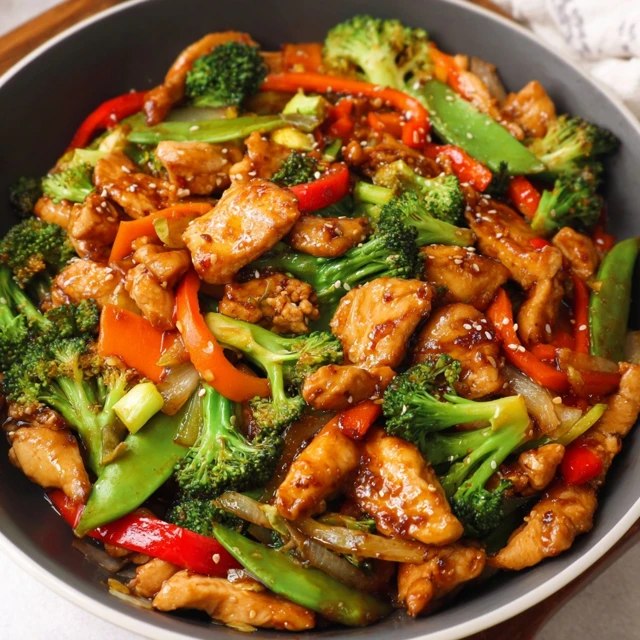
This is the dinner I make whenever someone says “let’s order Chinese” and I want to prove the takeout box wrong. Chicken stir fry with vegetables is the takeout favorite you’ll never order again once you make it at home: velveted chicken breast strips seared hot in a wok with broccoli, bell peppers, snap peas, garlic, and ginger, coated in a glossy soy-honey-sesame sauce. 25 minutes, serves 4, healthier and tastier than the Chinese-takeout container.
Fun fact: “velveting” — the Chinese restaurant technique of marinating raw meat in cornstarch, egg white, and rice wine — is what makes takeout chicken so impossibly silky and tender. The cornstarch coating creates a protective barrier that traps moisture during high-heat cooking, while the egg white tenderizes the protein. The technique dates back to imperial Chinese kitchens of the Tang Dynasty (618-907 CE) and is the single biggest difference between home stir-fries and restaurant ones.
Why this recipe works
- Velvet the chicken in cornstarch + soy. 15 minutes of marinating in cornstarch + soy + sesame oil = silky restaurant-textured chicken. Raw cubed chicken gets dry and stringy when seared.
- Cook in batches, never crowd. A crowded wok steams instead of sears — you get gray rubbery chicken. Cook in 2 batches with the pan ripping hot.
- Stir-fry over the highest heat your stove allows. Real wok cooking happens at 600°F+. Home stoves max around 400°F, but ALL the way up is essential for that “wok hei” smoky char.
Nutrition information
- Calories: 420 kcal per serving (without rice)
- Protein: 38 g
- Carbohydrates: 28 g
- Fat: 16 g
- Vitamin C: 180% DV (from bell peppers + broccoli)
- Vitamin A: 45% DV
Pro tips for restaurant-quality stir-fry
- Prep EVERYTHING before turning on the stove. Stir-fry happens in 8 minutes total once heat is on. All veg cut, sauce mixed, rice cooked, plates ready.
- Use a carbon-steel wok if you can. Carbon steel gets hotter than nonstick and develops that signature smoky “wok hei” flavor. Cast iron is second best.
- Slice chicken THIN against the grain. Across-the-grain cuts shorter muscle fibers — way more tender. Slice while partially frozen for cleaner cuts.
- Add sauce at the END, not the beginning. Pouring sauce in at the start makes everything steam. Adding it last lets it coat and glaze instead of boil.
Frequently asked questions
Why is my stir-fry watery?
Two causes: pan wasn’t hot enough (preheat until smoking), or you crowded the chicken (steam comes off too much protein in one batch). Cook in 2 batches over high heat — always.
How long do leftovers keep?
Refrigerator 3 days. Reheat in a hot skillet (not microwave — turns veg soggy) with a splash of water. Best fresh, but reheats well if you use a hot pan.
Can I use chicken thighs?
Yes — boneless skinless thighs work great and are more forgiving (harder to overcook). Slice the same way, marinate the same way. Cooking time stays the same.
What’s oyster sauce and is it necessary?
Salty-sweet thick sauce from oyster extract — adds umami depth. Not strictly necessary; sub 1 extra tbsp soy sauce + 1 tsp brown sugar. Lee Kum Kee or Mama Sita’s are the best brands.
Can I meal-prep this?
Yes — divide into 4 containers with rice. Refrigerator 3 days. Reheat in microwave or skillet. Veg will lose some crispness; add a fresh squeeze of lime before eating to brighten.
What rice should I serve with this?
Jasmine rice is classic — fragrant and slightly sticky to catch the sauce. Brown rice for more fiber. Cauliflower rice for low-carb. Skip the rice entirely if you doubled the veg.